AI powered MVP development for startups
I help you turn your idea into a working product, from deciding what belongs in version one to launching it for real users. You work directly with me throughout the build.
I’m Ratna Deep Verma. I help startups build the smallest working version of their product, using AI where it solves a specific problem. With 14 years in software development, I guide scope and delivery personally, supported by a team based in Delhi NCR.
What do you actually get?
A product in front of users, not a demonstration that only works on the happy path.
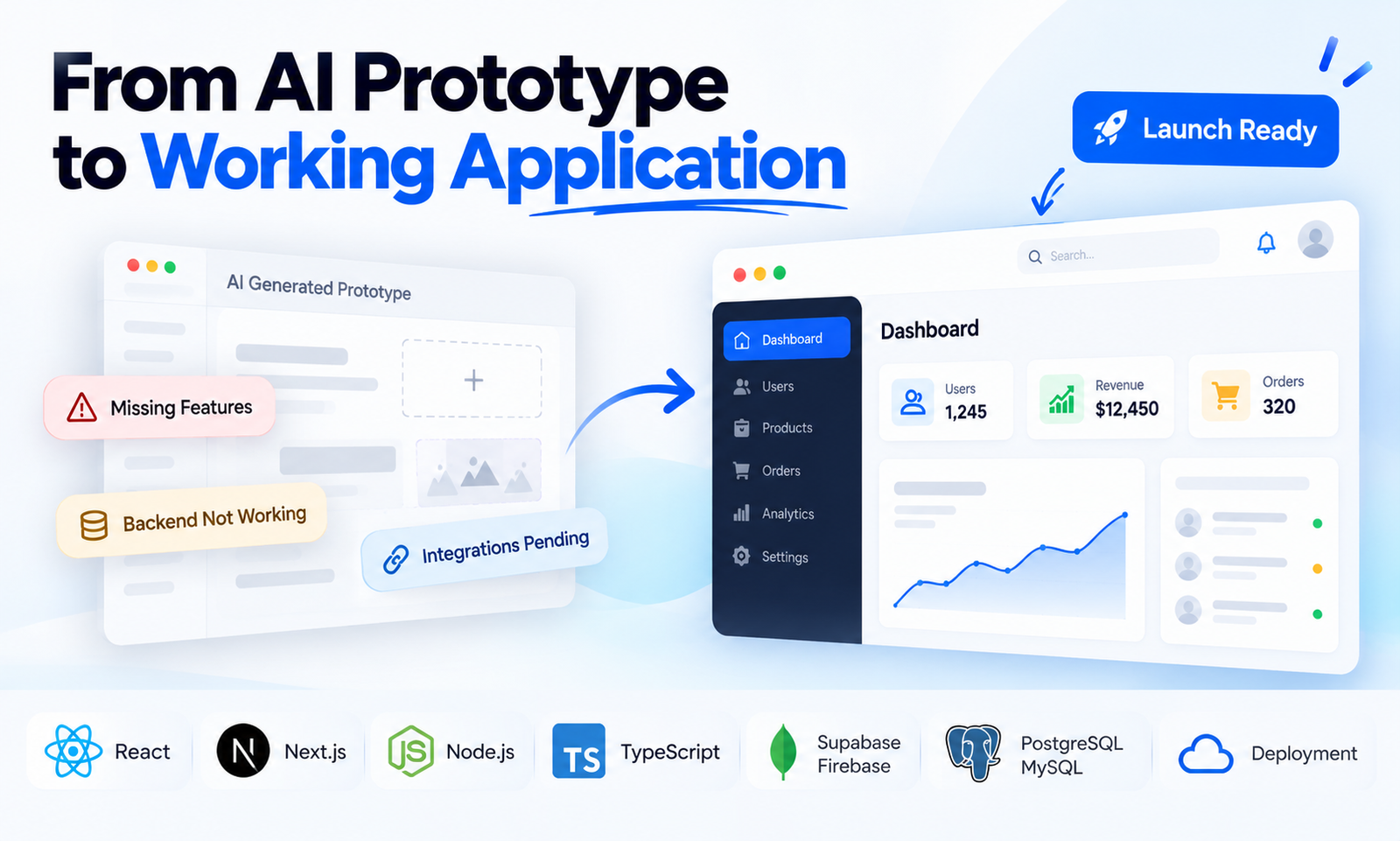
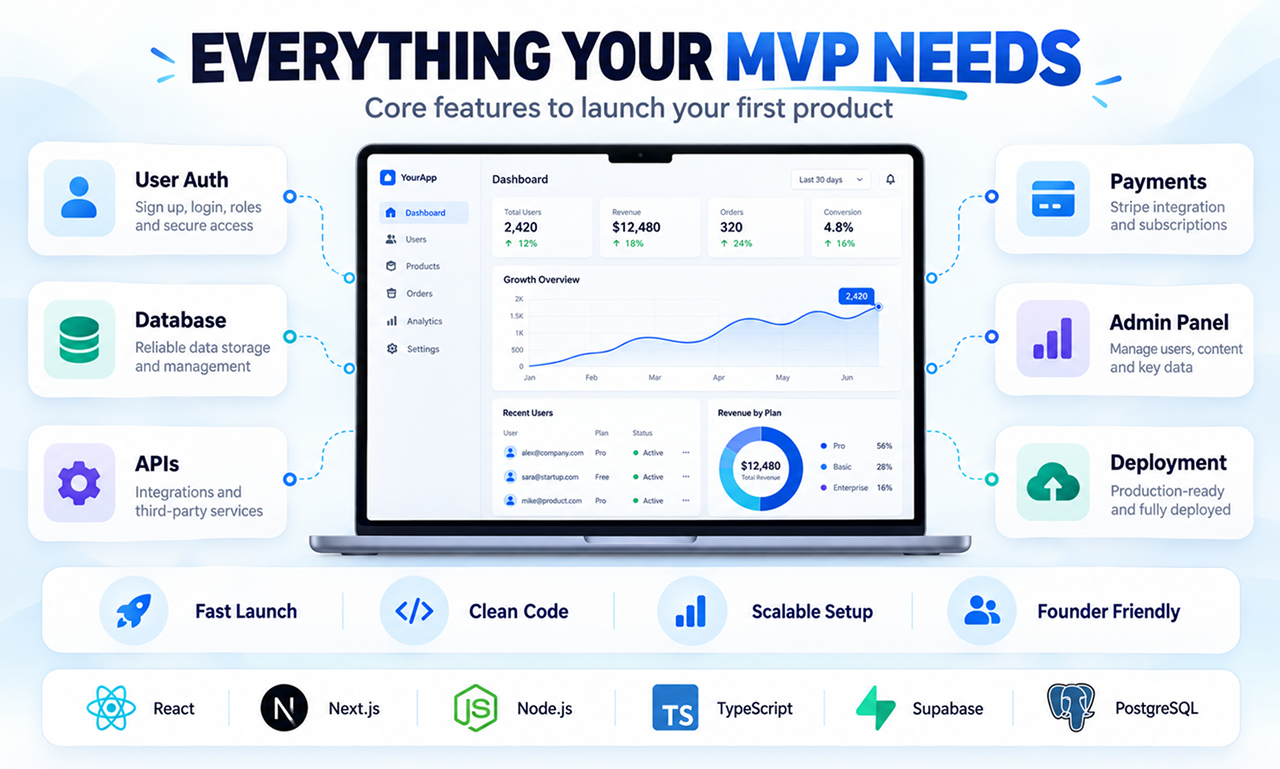
A working product, not a prototype
Real accounts, real data, deployed where users can reach it. A clickable design file shows how the idea reads, not whether anyone will use it.
AI only where it is needed
A model goes in when it does something rules cannot, such as reading unstructured documents or answering over your own content. When ordinary code is cheaper and more predictable, I will say so.
Foundations that survive version two
Authentication, payments and data structure done properly the first time. MVP rewrites often happen because the foundations were rushed, not because the features were wrong.
Everything transferred to you
Source code, design files, infrastructure accounts and documentation. You can raise a round, hire a team and take it in house without asking permission.
How do you decide what goes in version one?
Founders arrive with a feature list. The job of scoping is to find the smallest part of it that tests the real question.
Name the assumption you are testing
Most startup ideas rest on a few unproven beliefs. The MVP exists to test them, and anything that does not serve it can wait.
Cut to one user and one path
One type of user, doing one valuable thing, end to end. Admin panels, settings screens and second user roles are what turn a short build into a long one.
Agreed scope
Deliverables, checkpoint dates and cost are agreed on a call before work starts.
Build, review, launch
You see working software at regular checkpoints, so changes surface while they are still cheap. Handover includes code, documentation and access.
Why hire me rather than an agency or a freelancer?
You get one person scoping and answering for the project, and a team of 30 doing the build.
One person accountable
I scope your product and stay your point of contact through delivery, so you do not have to re-explain it to a new contact partway through.
A team of 30 behind me
OakyWeb has delivered more than 200 projects for over 100 clients since 2017, so the work does not stop when one person is unavailable.
Who has the team worked for?
The same team has delivered for PPAP, AIIMS Delhi and AIIMS Rishikesh, and currently works with Kokuyo India.
Questions founders ask
What is included in an AI powered MVP build?
It is building the smallest working version of a product that real users can try, with AI used inside the product where it does something ordinary code cannot, and in the build process to move faster. The output is a deployed product with real accounts and real data, not a clickable prototype.
How long does it take to build an MVP?
The timeline depends on how much the first version has to do, so any figure quoted before a scoping call is a guess. After one call you receive a written timeline with checkpoint dates. Removing a second user role or an admin panel from version one is usually the fastest way to bring a launch date forward.
How much does an MVP cost?
Cost follows scope: how many user roles, how many integrations, whether payments and AI features are in version one. You get a written estimate covering deliverables, timeline and price before any commitment, and no obligation to proceed with it.
Who will build my MVP?
Ratna Deep Verma, who has 14 years of experience in IT software development, leads the build. OakyWeb, which he co-founded in 2017, has a team of 30 people.
Should my MVP use AI at all?
Only where it does something rules cannot, such as reading unstructured documents or answering questions over your own content. If a task follows fixed rules, ordinary code is cheaper to build, cheaper to run and easier to audit, and I will recommend that instead.
Tell me about your idea
One paragraph on what you want to build and who it is for. You will get a reply on scope and fit.